
| AS AT: 01 March 2026 | |
| Equivalent Used Tyres Saved from Landfill | 2,344,977 |
| Cubic Meters Saved | 234,977 |
| One XTYRE Rubber Load Device (Pallet or Skid), saves on average 60sqm of deforestation and in-turn the eradication of sustainable biodiversity in relation to this footprint. | |
Why are traditional wooden pallets costing businesses more over time?

Why Wooden Pallets Are a Hidden Cost in Modern Supply Chains
Wooden pallets have been the default choice for decades—not because they are the most efficient, but because they appear inexpensive at first glance. In reality, wooden pallets quietly drive up costs through frequent replacement, product damage, safety risks, and disposal issues. For logistics, manufacturing, and industrial buyers, the real cost of pallets is far higher than the purchase price.
This article breaks down where wooden pallets fail modern supply chains—and why more businesses are switching to longer-lasting recycled rubber alternatives.
- Lower replacement frequency
- Reduced product and handling damage
- Improved safety and sustainability outcomes
Key Takeaways
- Cost: Wooden pallets cost less upfront but more over time
- Durability: Breakage and moisture damage drive replacements
- Operations: Inconsistent pallets disrupt handling efficiency
- Safety: Splinters, nails, and collapse increase injury risk
- Better Alternative: Recycled rubber pallets last years, not months
The Problem with “Cheap” Pallets
Wooden pallets are widely perceived as disposable and replaceable. That mindset alone creates inefficiency. Because they are expected to fail, they are rarely optimised for longevity, consistency, or safety.
In real-world operations, wooden pallets commonly:
- Crack or collapse under repeated heavy loads
- Absorb moisture, leading to warping and hygiene issues
- Shed splinters and nails that damage goods and injure staff
- Require constant inspection, repair, or disposal
Each of these issues introduces hidden costs that compound over time.
Cost Driver #1 — High Replacement Frequency
Wood pallets are not designed for long service life. In high-throughput environments, many pallets last only a few trips before needing repair or replacement.
That means:
- Continuous repurchasing
- Increased procurement administration
- Inconsistent pallet quality across fleets
What looks like a low unit price quickly becomes a recurring operational expense.
Cost Driver #2 — Product Damage in Transit and Handling
Wood is rigid and unforgiving. When pallets crack or flex unevenly:
- Loads shift
- Forklifts apply uneven pressure
- Goods absorb shock instead of the pallet
Recycled rubber pallets, by contrast, absorb vibration and impact—reducing breakage, returns, and insurance claims.
Cost Driver #3 — Safety and Workplace Injuries
Splinters, exposed nails, and collapsed boards are common causes of:
- Hand and foot injuries
- Forklift instability
- Slips and falls
These incidents result in downtime, claims, and compliance risks—costs that rarely appear in pallet budgets but hit operations hard.
Cost Driver #4 — Disposal and Waste Management
Wooden pallets are often:
- Landfilled
- Burned
- Stockpiled as waste
Disposal fees, storage space, and environmental reporting obligations all add cost—especially as sustainability scrutiny increases.
A Different Way to Think About Pallets
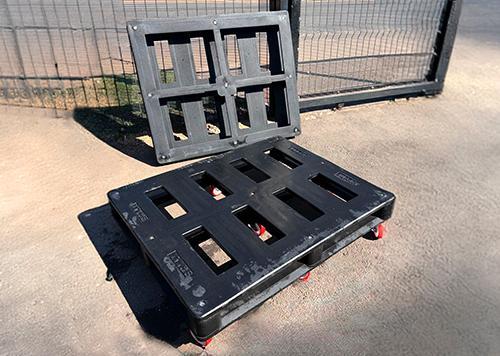
XtyreGlobal manufactures industrial pallets from recycled tyres—turning waste into long-life logistics assets.
Instead of disposable pallets, the focus shifts to:
- Durability over decades
- Predictable performance
- Reduced total cost of ownership
Where recycled rubber pallets perform best
- High-load industrial environments
- Wet, cold, or outdoor conditions
- Closed-loop logistics systems
- High-traffic warehouses
Pallet Material Comparison
| Criteria | Wood | Plastic | Recycled Rubber |
|---|---|---|---|
| Lifespan | Short | Medium | Long |
| Shock Absorption | Low | Medium | High |
| Moisture Resistance | Poor | Good | Excellent |
| Repair Needs | High | Medium | Low |
| Disposal Impact | High | Medium | Low |
| Total Cost (5 yrs) | High | Medium | Lowest |
Verdict: If your operation prioritises longevity, safety, and predictable costs, recycled rubber pallets consistently outperform alternatives.
Where Businesses See Immediate Benefits
Logistics & Distribution
Reduced pallet breakage and product damage.
Manufacturing
Stable, heavy-load performance without constant replacement.
Cold & Wet Environments
No rot, swelling, or hygiene degradation.
FAQs
Are rubber pallets heavier than wood?
They are heavier, but this improves stability and load control without affecting forklift compatibility.
Do they work with existing forklifts and racking?
Yes. Rubber pallets are designed for standard material-handling equipment.
How long do rubber pallets last?
Often several years longer than wood, even in demanding conditions.
Are they more expensive upfront?
Yes—but significantly cheaper over their lifespan.
Why Buyers Are Rethinking Pallets
- Fewer replacements
- Lower damage rates
- Improved worker safety
- Strong ESG alignment
- Reduced waste
Ready to Reduce Pallet Costs Long-Term?
Switching pallet materials is one of the simplest ways to cut hidden logistics costs.
Request a Quote Speak to an ExpertRelated Reads